Fundamental Principles Of Resilient Cloud Infrastructure For Modern Software Engineering Teams Everywhere
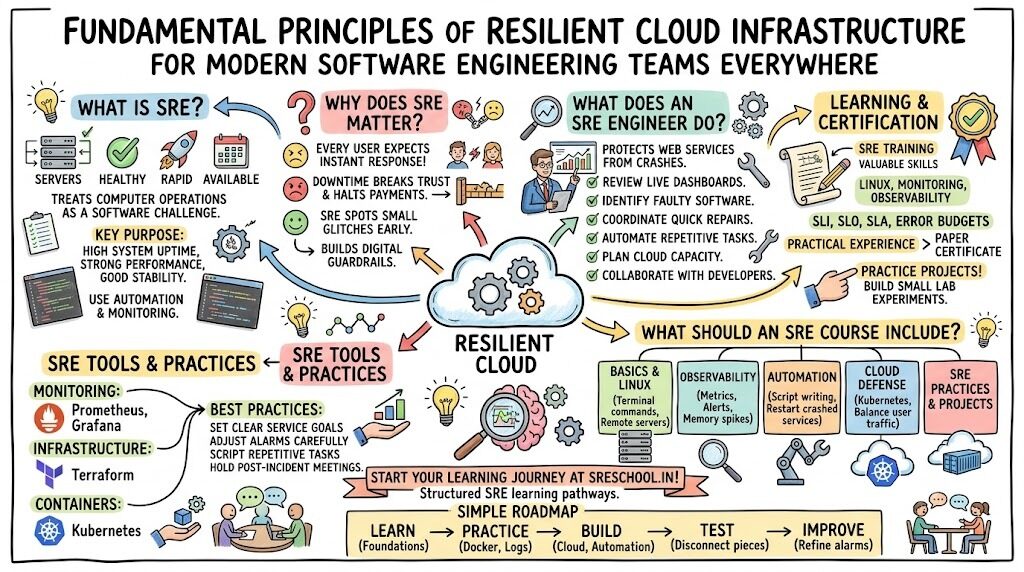
What Is Site Reliability Engineering?
Site Reliability Engineering means using code to run computer systems. The main purpose is to keep software working well. Reliability means your app does not fail when you need it. System uptime is the time a computer stays awake and ready. Good performance means screens load fast when you click a button. Stability means the software stays strong during heavy use. Engineers use automation to complete daily jobs without human hands. Automation is code that does routine work for you. Engineers also use monitoring to watch over machines day and night. Monitoring is like a health watch for your computers.
Why Does SRE Matter?
People want their favorite games and apps to work fast. Downtime happens when a computer stops working completely. Slow apps make people angry and bored. Service failures can stop a whole company from selling goods. This harms business growth and costs money. A broken site makes people lose their trust in the brand. SRE helps teams spot small errors very fast. It also stops the same glitch from happening twice. Teams look at past mistakes and patch bad code right away. SRE keeps apps steady, so people stay happy and calm.
What Does an SRE Engineer Do?
An SRE Engineer guards systems from unexpected breakdowns. They look at computer screens to check live traffic. They handle alerts when a server gets too hot. An alert is an alarm that calls for help. They lead the fix when a major system crashes. Engineers automate boring, repeated tasks with short computer scripts. They do capacity planning to buy enough cloud memory for tomorrow. They manage cloud servers and clean up old files. They work side by side with software coders every day. For example, if a store app freezes at checkout, they trace the error and fix it immediately.
What Is SRE Training?
Good SRE Training teaches you the building blocks of systems. First, you learn Linux, which is a computer brain for servers. Next, you study monitoring and observability to see internal health. An SLI is a measure that shows if users get quick service. An SLO is the target score your team wants to hit. An SLA is a formal promise made to customers. An error budget is the small amount of failure you allow. You also learn how to lead during major breakdowns. Students practice with containers, which pack apps into neat boxes. Kubernetes helps manage thousands of these tiny software boxes.
Why Consider SRE Certification?
An SRE Certification shows that you know the basic facts. It gives beginners a clear roadmap for study. You read books and follow lessons in a tidy order. It helps organize your tech thoughts into a neat stack. But a certificate alone does not make you a master. You still need hands-on practice on real computers. Learners should build real labs and test their own skills. Practice helps you solve surprise errors under real stress. A paper badge works best when you also have real project skills.
What Should an SRE Course Include?
A complete SRE Course guides a learner through simple levels.
SRE Training in India
Cloud technology is growing very fast across India today. Many companies now hire skilled people for modern DevOps roles. Indian engineers work with teams located all across the globe. These workers build apps on big cloud platforms like AWS and Azure. They use scripts to launch servers in a few seconds. Teams need practical skills to run large production platforms without delay. SRESchool.in helps learners in India master these essential hands-on skills. It gives students a smart path toward real cloud work. Practical study helps tech workers grow into reliable system experts.
SRE Tools
Engineers use special software tools to watch their computers.
SRE Best Practices
Reliability requires smart habits every single day. Teams must set clear service goals that everyone can read. Track only metrics that matter to the real user experience. Set smart alerts so alarms do not wake you for nothing. Too many fake alarms cause alert noise, which makes engineers tired. Always automate repeated tasks so humans make fewer typos. Test every tiny code update before you ship it live. Prepare for bad incidents by writing simple help guides. Review every past breakdown to find the root cause. Reduce technical debt by cleaning messy code regularly. Learn from mistakes so your app becomes stronger tomorrow.
Real-Life Scenarios
SRE concepts show up during regular work days.
Sudden Traffic Rush: A shopping site starts a flash sale at noon. Thousands of buyers visit the web page at once. The SRE script detects high traffic and starts new servers automatically. The site stays fast, and shoppers buy their items without errors.
Bad Code Release: A developer uploads a broken line of code. The error rate jumps quickly on the dashboard. The automated monitor spots the issue and cancels the new release. The system shifts back to the safe, working version within two minutes.
Server Disk Full: A database stops saving records because its storage drive is full. The monitoring tool alerts the engineer before the whole app dies. The engineer cleans out old test logs and expands the disk space. The service stays up without any lost user data.
Common SRE Mistakes to Avoid
New teams often make simple mistakes when managing systems.
Alert Fatigue: Sending too many alarms for tiny errors makes workers ignore alerts. Fix: Delete useless alarms and keep only urgent ones.
Manual Restarts: Fixing dead servers by hand wastes time and causes human mistakes. Fix: Write an automatic script to reboot stuck tasks.
No Clear SLO: Building systems without clear speed goals confuses the whole team. Fix: Agree on simple uptime targets with product managers.
Skipping Postmortems: Ignoring past breakdowns means you will repeat the same failure. Fix: Write a blame-free report after every major incident.
Testing in Production: Trying new ideas on live users can cause huge crashes. Fix: Build a safe test lab to check new features first.
Ignoring Capacity: Running out of computer memory causes slow page loading times. Fix: Review growth numbers every month to buy enough server space.
Fear of Failure: Hiding mistakes makes teams slow and fearful of changes. Fix: Celebrate fast learning and fix broken code together.
Messy Documentation: Keeping emergency steps in your head slows down other helpers. Fix: Write clear, short steps in a shared team guide.
SRESchool.in Learning Support
SRESchool.in gives students a clear place to study modern reliability. Learners can explore comprehensive Site Reliability Engineering Training to build hands-on skills. A structured SRE Course helps you understand complex networks with simple lessons. You can prepare for Site Reliability Engineering Certification with confidence. Helpful SRE Tutorial guides explain tricky concepts like containers and error budgets. The lessons cover important SRE Tools that engineers use on the job. You will also study key SRE Best Practices for daily operations. This learning path supports anyone aiming to become a professional SRE Engineer. The program offers focused SRE Training in India for growing developers.
SRE Learning Roadmap
You can master system reliability by following five basic steps.
Learn: Study basic Linux commands and network concepts. Read about system health, uptime goals, and small error budgets.
Practice: Write simple Bash or Python scripts on your personal computer. Install Docker to pack your own apps inside safe containers.
Build: Launch a free cloud server on AWS or Google Cloud. Set up Prometheus to track how much CPU power your app uses.
Test: Turn off your test database to see what happens. Check if your alert sounds the alarm right on time.
Improve: Automate your manual fixes so the system heals itself next time. Read postmortem notes to make your project stronger.
Frequently Asked Questions
1. What does an SRE Engineer do every day?
An SRE Engineer keeps software systems fast, steady, and secure for all users. They spend time writing scripts to automate daily operational tasks. They also set up monitoring dashboards to spot system health issues early. When a server crashes, they lead the fix to restore the website. Afterward, they study the error to stop it from happening again.
2. Can a beginner learn Site Reliability Engineering?
Yes, any motivated beginner can learn Site Reliability Engineering with the right steps. You do not need to know everything on day one. Start by learning basic Linux commands and simple Python coding. Next, study how websites talk to databases over the internet. With regular practice and small home projects, you can master the core ideas.
3. What is the difference between DevOps and SRE?
DevOps is a team mindset that brings coders and operators together. Site Reliability Engineering is a concrete way to make that mindset work. SRE uses software code to solve everyday system operation headaches. DevOps asks for fast changes, while SRE protects overall system stability. Both practices work together to deliver strong, dependable software to happy end users.
4. Why are error budgets important for software teams?
An error budget is the small amount of downtime an app can safely suffer. It creates a fair balance between shipping features fast and staying stable. If your team has budget left, you can launch fun updates. If you burn the budget on crashes, you must stop and fix bugs. This keeps both coders and system admins happy.
5. What are the best tools to learn first?
Beginners should start with basic Linux terminal tools and git version control. After that, learn Docker to run programs inside tiny software boxes. Next, practice with Prometheus to collect server metrics and Grafana to build dashboards. Finally, try Terraform to build cloud servers using clean text files. These core tools build a very strong foundation.
6. Do I need to be a strong coder for SRE?
You do not need to build complex video games or mobile apps. But you do need to write clear, simple automation scripts. Most engineers write scripts in Python or Go to handle repetitive tasks. Coding helps you talk to cloud services and restart frozen programs automatically. Basic coding skills will make your daily system work much faster.
7. What is an incident postmortem?
A postmortem is a written review completed after an application breaks down. The team meets to trace what happened without blaming any single person. They look at why the alarm failed and why the server crashed. Then, they create action items to fix the weak spots permanently. This practice turns annoying mistakes into useful learning moments.
8. How does monitoring differ from observability?
Monitoring tells you when a computer system stops working as expected. It checks simple numbers like server memory and counts bad web errors. Observability lets you look deep inside to understand why a weird error happened. It uses metrics, logs, and traces to explain internal system states. Both practices help you fix nasty bugs very quickly.
9. What is an SLI in simple words?
An SLI stands for Service Level Indicator, which is a real measurement. It tells you how well your service is doing right now. For example, it tracks how many web pages load in under one second. It acts like the speedometer on your family car. You need this number to know if users enjoy a fast experience.
10. What is an SLO in simple words?
An SLO stands for Service Level Objective, which is a clear target goal. It is the target score your engineering team promises to hit every month. For example, you might aim for 99 percent of web visits to succeed. It helps teams decide when the app is stable enough for brand new features.
11. Why do companies hire SRE teams today?
Modern companies lose big money when their shopping apps or payment tools freeze. Customers leave bad reviews and switch to other apps when software is slow. SRE specialists protect business revenue by stopping outages before they hit the public. They build strong, automated systems that run smoothly with very little human help.
12. How does automation help an engineering team?
Automation removes boring, repetitive tasks from an engineer's daily routine. Humans make silly typing mistakes when they feel tired or rushed during an outage. Smart computer scripts run the exact same steps without making careless errors. This speeds up daily work and leaves more free time for creative engineering projects.
Conclusion
Site Reliability Engineering keeps modern software fast, reliable, and secure for everyone around the world. Systems need smart care so users can buy goods and play games without annoying crashes. SRE replaces boring human chores with smart automation scripts. When errors happen, engineers study the facts and build stronger guardrails. SRESchool.in provides a structured learning platform to guide beginners on this exciting technical journey. Learning these operational habits will help you understand modern cloud networks clearly. Start exploring simple Linux commands and basic monitoring tools today to build your own reliable systems.