Reliable Ways to Explore Vancouver Coastal Roads With Bike Options on Motoshare
Why Rent a Motorcycle in Canada?
Riding a bike in Canada gives you great freedom every single day. You can skip slow traffic jams in big cities because two wheels move easily. Parking a motorcycle is also simple, and you can fit into small street spots quickly. You can take short trips to local parks, or you can ride all day on scenic routes. But every rider must follow basic Canadian laws before hitting the open highway. You must hold a valid motorcycle driver licence that works in Canada. You must also check your age, insurance papers, safety gear, and the rental deposit. A security deposit is money you leave with the host to cover any small scratches. When you bring the bike back safe, you get that money returned.
Motorcycle Rental Options Across Canada
You can find great rental bikes in every major Canadian province. A motorcycle rental Toronto trip lets you see Lake Ontario and green parks near the big city. If you choose a motorcycle rental Vancouver ride, you see tall mountains and the blue Pacific Ocean. Mountain lovers often search for a motorcycle rental Calgary trip to ride through the tall Rocky Mountains. People also rent bikes in Montreal, Ottawa, and Halifax for fun city tours. The table below shows popular Canadian cities and fun trip ideas.
| Canadian City | Best Trip Style | Simple Trip Ideas |
| Toronto | City and lake ride | Cruise around Lake Ontario or ride to Niagara Falls |
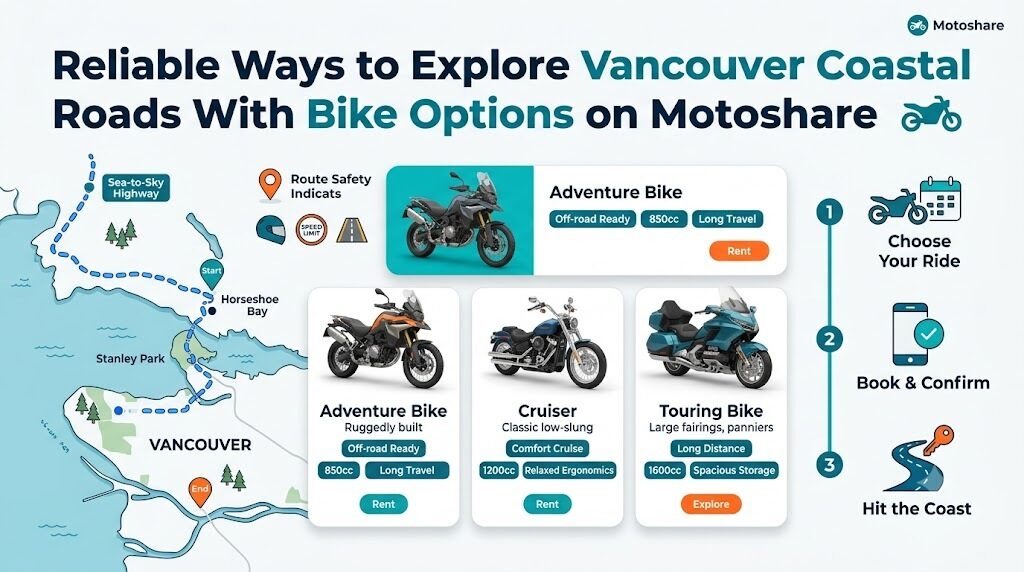
| Vancouver | Ocean and mountain trip | Ride the Sea-to-Sky Highway up toward Whistler |
| Calgary | Mountain passes and trails | Visit Banff National Park and see Lake Louise |
| Montreal | Historic town cruising | Ride past old stone buildings along the Saint Lawrence River |
| Ottawa | Quiet river highways | Cruise along the Ottawa River and see canal parks |
How MotoShare Helps Riders
MotoShare makes finding a ride quick and simple for travelers across Canada. You go to the website and type in your city and your travel dates. Next, you can see all available bikes and compare prices side by side. You can pick small commuter bikes that sip very little fuel on daily trips. You can also pick fast sports bikes, big highway touring bikes, or tough adventure bikes. MotoShare also lists cars for days when rain pours down or your family joins. You see clear pictures, read real reviews, and chat with local vehicle hosts online. This marketplace lets you plan your whole Canadian trip without calling ten different shops.
Pick the Right Motorcycle for Your Trip
Picking the right bike keeps your trip safe, fun, and relaxing. You must pick a bike that fits your real riding skill and body height. If your feet cannot touch the ground, you might tip over at red lights. Tall adventure motorcycle rental Canada options work great for dirt paths, gravel trails, and high mountains. Big touring bikes carry hard luggage bags and keep wind off your chest on highways. Commuter bikes work best in downtown traffic because they are light and turn easily. The table below compares common bike types and key things to check.
| Motorcycle Type | Best Use Case | Key Things to Check |
| Commuter Bike | City streets and work trips | Low seat height and great fuel use |
| Sports Bike | Short paved weekend rides | Quick throttle and forward riding stance |
| Touring Bike | Long highway journeys | Wind protection and large luggage cases |
| Adventure Bike | Gravel roads and mountain passes | Strong tires and tall seat clearance |
| Premium Cruiser | Relaxed scenic highway tours | Heavy frame and comfortable soft seats |
Plan a Motorcycle Road Trip in Canada
Good planning turns a regular vacation into a wonderful motorcycle road trip Canada adventure. First, map out your daily travel route and plan fuel stops before gas runs low. Gas stations in the Canadian countryside can sit very far apart along quiet highways. Next, check the daily weather report, because Canadian skies can bring sudden rain or cold chills. Pack good rain gear, strong gloves, a warm jacket, and a DOT-approved safety helmet. Also, bring a phone charger and mount your phone safely to the bike handlebar. Take rest breaks every two hours so your body stays fresh, sharp, and alert. Follow all posted road signs and keep your headlights on all day long.
Real-Life Scenarios
City Sightseeing in Toronto: You land at Toronto Pearson Airport for a weekend business trip. You want to see the CN Tower and lakefront parks on sunny afternoons. So, you rent a light commuter bike for two days to zip past slow traffic.
Rocky Mountain Ride From Calgary: You fly into Calgary with a friend to see the blue mountain lakes. You rent two tall adventure bikes with hard bags for your warm clothes. You ride through Banff, snap photos of snowy peaks, and sleep in cozy mountain cabins.
Rain Day Switch to a Car: You plan a coastal tour out of Vancouver, but heavy rain covers the coast. You do not want to get soaked on wet mountain roads for five days. So, you look for a car rental Canada option to stay warm and dry.
Motorcycle Rental Near Me: What to Check
When you search for motorcycle rental near me, look beyond the closest map pin. The closest shop might not offer the right bike size or fair rental terms. First, check the exact pickup address and open shop hours for pick-up days. Next, ask about daily mileage limits so you do not pay high fees for long rides. Look closely at the fuel policy, which usually means returning the tank completely full. Also, ask about the security deposit amount and how many days refunds take. Inspect the tires, brake levers, and lights before you sign any rental paper. Take clear photos of every small scratch so you have proof of the original shape.
Rental Costs and Other Charges
The daily base price is only one part of your total trip cost. You must also budget for fuel, daily insurance coverage, and local sales taxes. Some hosts give you unlimited miles, but other hosts charge extra fees for each mile. If you bring a bike back with an empty tank, shops charge high fuel fees. Security deposits also lock up funds on your credit card for several days after your trip. Look at gear fees if you plan to rent helmets, jackets, or GPS units. Also, read the host cancellation policy carefully in case your travel plans change quickly. Adding all these small costs up helps you pick the most affordable rental deal.
Common Rental Mistakes to Avoid
Skipping the bike walk-around: Many riders rush out without checking the body panels for old scratches. Always walk around the bike and snap clear photos with your phone camera first.
Picking a bike that is too tall: Beginners often rent heavy bikes they cannot balance flat on their feet. Sit on the seat first and make sure both feet touch the flat ground.
Ignoring Canadian weather swings: Mountain passes can get freezing cold even during bright summer afternoons. Pack warm base layers and waterproof rain jackets in your saddlebags every single day.
Forgetting about fuel range: Small gas tanks run dry quickly on quiet, empty northern highways. Look up gas station spots before you leave and fill up at every half-tank mark.
Missing mileage rules: Some cheap rentals have tiny daily mileage caps that trigger steep fees. Read the rental agreement closely and choose unlimited miles for long road trips.
Renting without riding gear: Wearing shorts or sneakers on a motorcycle is unsafe and against rental rules. Bring sturdy boots, tough gloves, an approved safety helmet, and an abrasion-resistant jacket.
Forgetting the security deposit hold: Some credit cards decline if a large deposit hold maxes out your limit. Call your bank early to make sure your card has enough room for holds.
Riding on bad roads: Standard street bikes can crash on deep mud or loose mountain gravel. Stay on smooth paved highways unless you rent a dual-sport or adventure bike.
Who Can Use MotoShare?
MotoShare serves many kinds of travelers who want quick, flexible transport in Canada. Tourists visiting from other nations can rent a motorcycle in Canada using their home country licences. Local riders use the platform to test different bikes before buying a new one. College students and working professionals use it for cheap weekend trips to lakes and cabins. Solo travelers love renting nimble bikes to explore country backroads at their own pace. Couples can rent comfy touring cruisers with soft backrests for long, scenic weekend escapes. When winter snow covers roads, travelers can switch to car rental Toronto options on MotoShare.
Frequently Asked Questions
1. What licence do I need to rent a bike?
You must hold a valid motorcycle driver licence from your home province, state, or country. Learner permits are usually not accepted by rental hosts. The licence must show that you can ride without restrictions. Always carry your real plastic card, because digital photos or paper copies are not accepted at pickup.
2. How old do I have to be to rent?
Most rental hosts in Canada require riders to be at least twenty-one years old. Some high-power sports bikes or luxury touring bikes require riders to be twenty-five years old. Always check the exact age limit on the vehicle listing page before you send your booking request to the host.
3. Can international visitors rent motorcycles in Canada?
Yes, tourists can rent motorcycles in Canada if they have a valid motorcycle licence from home. If your licence is not in English or French, carry an International Driving Permit. You must also show your passport and a valid credit card under your legal name at the pickup desk.
4. What happens if it rains during my rental?
Rain is common in Canada, so you should pack good waterproof gear for your ride. If extreme storms or snow hit, talk to your rental host right away about moving your dates. Some hosts offer flexible rebooking policies when severe, dangerous weather makes riding on highways unsafe for anyone.
5. Is motorcycle insurance included in the daily price?
Basic third-party liability insurance is required by Canadian law and is usually included in bookings. However, you should check collision and damage coverage levels very carefully. You can often purchase extra damage waivers through the platform to lower your financial risk if you drop the motorcycle during your trip.
6. How does the security deposit work?
The host places a temporary pre-authorization hold on your credit card when you pick up the bike. This hold covers minor damage, missing fuel, or unpaid toll highway charges. Once you return the motorcycle clean, full of fuel, and damage-free, the bank releases the full hold back to you.
7. Can I carry luggage on a rental motorcycle?
Yes, but it depends on the motorcycle style you choose for your trip. Touring and adventure bikes usually come with hard side cases and rear luggage racks. Sports bikes and commuter bikes have very little storage, so you will need to wear a comfortable, securely strapped riding backpack instead.
8. Are helmets and riding jackets provided with rentals?
Some hosts provide helmets and riding jackets for a small extra daily fee, but others do not. You should always ask the host before booking your trip dates. Most experienced riders bring their own well-fitting helmets and safety gloves to ensure proper fit, total comfort, and trusted crash protection.
9. Can I take the motorcycle across provincial borders?
Most Canadian hosts allow you to ride across provincial borders freely on long highway journeys. However, you must inform your host before leaving so insurance paperwork remains valid everywhere. You must also check whether your rental plan includes enough daily mileage to cover long cross-country distances between provinces.
10. What should I do if the bike breaks down?
Park the bike in a safe spot away from traffic and turn on your hazard lights. Call your rental host or the roadside assistance phone number listed on your booking receipt immediately. Do not attempt major engine repairs by yourself without direct written permission from the motorcycle host or rental shop.
11. Can I rent a car instead of a bike?
Yes, you can rent cars on the platform when you travel with family, friends, or heavy baggage. Cars also keep you dry and warm during freezing cold Canadian spring or autumn road trips. You can easily switch between motorcycle and car choices based on changing travel routes and local weather.
12. How do fuel charges work when returning the bike?
You must return the motorcycle with the same fuel level it had at pickup, which is usually completely full. Most Canadian bikes run best on premium high-octane gasoline. Keep your last fuel pump receipt to show the host that you filled the tank with the right gasoline type before drop-off.
Conclusion
Renting a vehicle gives you an easy, exciting way to explore Canada from coast to coast. Always check your driver licence, road insurance, bike height, route maps, and weather forecasts before your journey begins. Take time to read all rental terms, daily mileage limits, and fuel policies carefully so you never face surprise fees. MotoShare offers a simple online marketplace where you can compare bikes, read real reviews, and find trusted local hosts across the country. Choose the right ride for your travel plans, wear your safety gear, ride with care, and enjoy every scenic Canadian road trip.