Core Steps for Supervising Autonomous Mobile Robot Fleets Across Dynamic Warehouses
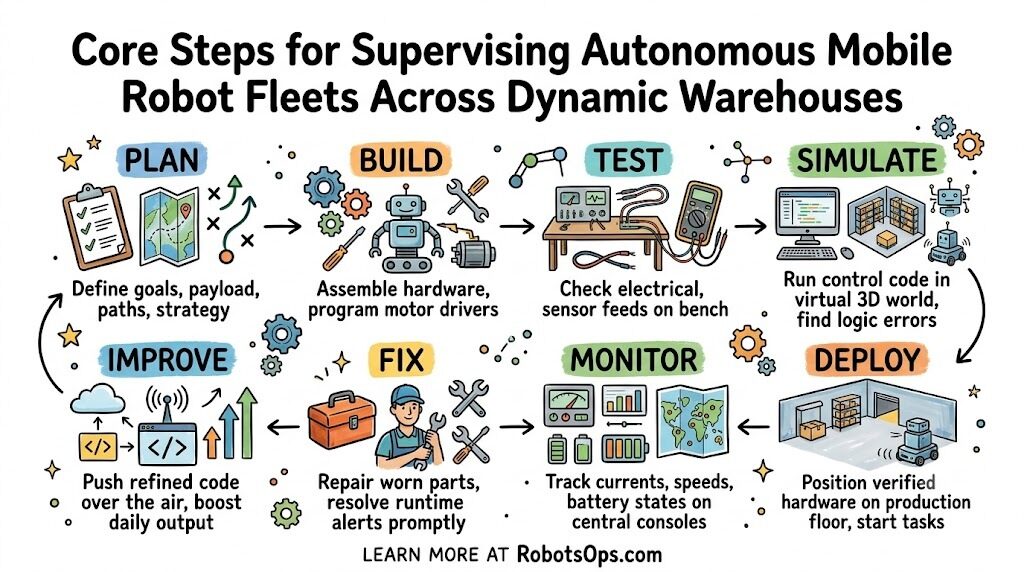
Engineers use the term RobotOps to describe robotics operations across working job sites. You might know how engineers care for computer code on personal laptops. Physical devices roll across dusty concrete floors, so they demand active daily maintenance. These machines can bump into objects, drain battery cells, or lose digital sight. Skilled crews watch sensor signals continuously, ship software upgrades, and fix unexpected faults right away. They steer large groups so workers remain safe. Learners discover clear operational guides on RobotsOps.com.
What Is RobotOps?
Every machine travels through several stages during its daily service life. First, developers build the frame and attach sensors. Next, technicians set up the units across real job sites. Operators watch live camera feeds on computer screens. They deliver software updates across the air to boost performance. They switch out broken wheels and lubricate gears. When a unit halts, teams resolve the incident immediately. Real equipment can strike walls or drag cords, making physical operations unique.
Why RobotOps Matters
Operating a single machine presents very few troubles for a crew. You can recharge its battery and inspect its rubber wheels. However, running fifty machines at once brings serious hurdles. Many devices can lose wireless connections or drain cells at the exact same moment. Dirty lenses cause machines to halt inside main travel corridors. When one mover stops, it creates a long traffic jam. Strong operational routines keep hardware rolling and protect daily warehouse targets.
RobotOps Areas
| RobotOps Area | Simple Meaning | Main Goal |
| Live Monitoring | Watching robot health on screens | Catch broken parts early |
| Fleet Control | Guiding many machines at once | Stop traffic jams on paths |
| Over-The-Air Updates | Sending new code through Wi-Fi | Fix software bugs fast |
| Remote Help | Driving stuck machines from afar | Clear blocked pathways quickly |
Robot Fleet Management Made Simple
Technicians supervise full machine teams using a single dashboard. Workers track live positions and review battery percentages across the entire warehouse. The program assigns pickup tasks to the nearest idle machine. When a unit gets confused, a specialist steers it safely past the obstruction. Central servers verify that each device runs verified code. This organized view prevents surprise stops and preserves machine health.
| Feature | Single Machine Use | Fleet Management System |
| Job Assignment | Human speaks directly to robot | Central brain picks best robot |
| Battery Tracking | Worker looks at robot screen | System orders low robots to charge |
| Traffic Flow | Machines might block each other | System prevents narrow hallway jams |
Industrial Robotics and Robotics Automation
Factories rely on heavy robotic arms to perform tough manufacturing tasks. These iron arms use digital controllers, electric motors, and fine sensors to lift parts. They build automobiles, fuse steel parts, and stack shipping cases. Industrial automation helps these devices run fast cycles without pausing. Still, factory managers dislike unexpected halts. Good operations spot warm motors, trade worn parts before failure, and release software patches without stopping production.
Real-World Robot Examples
| Robot Type | Common Work | RobotOps Need |
| Heavy Factory Arm | Welding car doors together | Track motor heat and joint wear |
| Warehouse Box Mover | Carrying boxes to shipping docks | Track battery levels and route jams |
| Hospital Delivery Bot | Bringing clean sheets to rooms | Manage Wi-Fi loss in elevators |
| Farm Field Rover | Removing weeds between crop rows | Update plant-spotting code remotely |
Robotics Software and ROS 2
Clever computer code helps a machine navigate, think, and handle heavy tools. Many engineers choose ROS 2 to run their equipment. This framework helps separate machine components communicate without delays. Independent software modules called nodes run focused tasks like analyzing video. Nodes swap messages through channels called topics. When equipment drives to a storage rack, it uses actions to finish the trip. Operational setups read ROS 2 alerts to track overall machine health.
Robot Simulation Before Real Deployment
Software simulation lets builders test new logic inside interactive virtual environments. These digital sandboxes replicate gravity, slippery surfaces, and unexpected obstacles. Programmers test route planning, visual tools, and emergency stops without harming expensive hardware. They run hundreds of tests each hour to catch glitches early. Virtual testing lowers costs and speeds up project schedules. Still, digital physics cannot mirror every floor defect, so teams always conduct manual floor trials.
Autonomous Mobile Robots
Autonomous Mobile Robots transport heavy products without human drivers. These wheeled platforms carry wooden crates and cardboard packages through active shipping hubs. They use laser rangefinders and optical cameras to steer around floor personnel. Fleet tools watch battery percentages and assign errands based on unit coordinates. The control system sends an alert if a carrier drops offline or halts inside a lane.
Robotics Operations Center
Command facilities resemble airport towers that track active air traffic. Technicians view live streams and diagnostic readouts across wall monitors. They observe fleet efficiency, clear error notifications, and verify firmware releases across distant plants. If a rolling platform encounters a water spill, operators spot the stoppage instantly. Remote operators drive the vehicle around the hazard using hand controls. Central rooms maintain orderly operations as companies expand their fleets.
Real-Life Scenarios / Experiences
A rolling delivery unit loses Wi-Fi connection inside a concrete hospital elevator shaft. The operations team spots the signal drop on their board and sends a local helper to reset the network antenna.
A box-moving cart detects a misplaced wooden pallet blocking aisle four. The cart sends an alert, and a remote operator redraws the floor map so other units take aisle five instead.
Five factory arms run hotter than normal during an afternoon shift. The predictive maintenance tool flags motor friction, so technicians lubricate the joints before gears break.
An over-the-air update causes three warehouse lifters to turn slowly. The fleet tool automatically rolls the software back to the previous version within two minutes.
Common Mistakes to Avoid When Choosing Delhi Events
People pick event venues without measuring doorway widths for display gear.
Event teams forget to test local Wi-Fi speeds before setting up digital booths.
Planners hire equipment vendors without asking for backup power options.
Organizers skip early schedule testing, so load-in trucks create outdoor street jams.
Teams forget to assign clear jobs, so workers duplicate setup tasks on site.
Staff ignore battery runtimes for wireless tools, leading to dead screens mid-event.
Managers order gear without checking floor weight limits in old halls.
Coordinators fail to plan emergency exits and open paths for safe crowds.
How RobotsOps.com Helps Learners
Curious students and working professionals find practical study materials on RobotsOps.com. The site covers essential disciplines like fleet management, robotics software, and industrial automation. Readers follow clear lessons on ROS 2, simulation sandboxes, and modern autonomous mobile robots. The platform shows how engineers build a functioning Robotics Operations Center. Simple explanations help learners grasp advanced robotics operations without confusing jargon.
A Simple RobotOps Workflow
Teams plan project needs and assemble physical frames. Next, they run code tests and verify movement within computer simulations. Then, operators release units onto factory floors and record live diagnostics. Finally, technicians patch system bugs and refine software using field insights. This ongoing loop improves machine safety with every shift.
Frequently Asked Questions
1. What does the word RobotOps mean?
Teams use the term RobotOps to describe robotics operations in real-world environments. It covers inspecting, updating, and fixing physical machinery after deployment across factories or warehouses. This field links software habits with mechanical maintenance routines. It keeps mechanical arms and mobile lifters moving smoothly throughout the day. Without these tools, workers spend extra hours checking equipment by hand.
2. Why do robots need care after deployment?
Industrial hardware faces rough, grimy surroundings daily. Dust clouds coat optical lenses, tires shed rubber treads, and battery packs gradually weaken. Software glitches can freeze a mobile cart during transit. Routine inspections discover worn components before an assembly line stops. Consistent maintenance keeps both machines and nearby floor staff safe.
3. How does RobotOps help autonomous mobile robots?
Autonomous carts transport heavy loads through packed inventory lanes. Operations software tracks vehicle positions, battery reserves, and path clearance continuously. When an obstacle traps a cart, the system alerts support staff right away. It reroutes other nearby units onto alternate corridors to prevent floor jams.
4. What is a Robotics Operations Center?
Command hubs allow operators to observe real-time machine telemetry across wall displays. Crews check equipment health, warning codes, and job progress across several facilities. If a breakdown occurs, staff identify the issue immediately. They take joystick control or dispatch a field technician to fix the mechanical problem.
5. Why should teams simulate robots before building them?
Virtual modeling allows developers to run code experiments inside safe computer worlds. Programmers check steering routines, camera vision, and safety stops without smashing metal parts. This approach preserves development budgets and flags logic bugs early. Once virtual checks succeed, engineers upload the code to real hardware with confidence.
6. What role does ROS 2 play in robot operations?
Engineers use ROS 2 as communication software that joins different mechanical components. It links camera sensors, motor wheels, and steering tools so they share clean data streams. Operations software gathers status messages and sensor data through ROS 2. This setup helps engineers isolate glitches and deploy safe updates.
7. How does fleet management keep factories safe?
Central fleet systems track the speed and coordinates of every active unit in the plant. When two vehicles meet near an entrance, the software slows one machine down. It blocks carts from entering walkways where factory workers stroll. Constant coordination avoids nasty collisions and maintains a secure workplace.
8. What is an over-the-air software update?
Wireless transmissions deliver fresh program code directly to machines across Wi-Fi. Technicians avoid attaching physical cables to dozens of individual vehicles. The patch repairs program errors, maps fresh corridors, and enhances power efficiency. If the patch fails, the system reinstalls the previous stable software version.
9. Why is physical maintenance part of RobotOps?
Mechanical hardware experiences wear, friction, and heat every single hour. Bearings loosen, drive belts fray, and delicate sensors shift out of alignment. Diagnostic programs monitor vibration levels and motor heat to predict equipment breakdowns. Technicians switch out old components during scheduled pauses to keep assembly floors running.
10. How do remote operators help stuck robots?
Bright reflections or loose debris can cause a mobile cart to stop safely. A monitoring console flags the stoppage for an off-site operator. The technician checks live video streams and steers the vehicle past the blockage using a controller. Fast intervention prevents major delays across the facility.
11. What is robot telemetry data?
Robots produce telemetry, which is a continuous stream of operational readings sent to host computers. It shares battery reserves, motor temperatures, travel speed, and laser scans. Fleet software evaluates these numbers every second to detect irregular wear. If a joint motor overheats, the software warns maintenance crews before it breaks.
12. Can small businesses use RobotOps tools?
Small companies running only two or three units gain immense value from light operations software. Cloud tools let managers inspect rolling carts and industrial arms from everyday laptops. The system sends instant text notifications whenever batteries run dry or motors need grease. These tools help lean crews stay productive.
CONCLUSION
Combining regular mechanical upkeep with modern software monitoring protects automated machine fleets over long shifts. Building a prototype only begins the journey, because working devices require steady observation, timely patches, and fast hardware repairs. Smart teams combine fleet platforms, modular software like ROS 2, simulation tools, and strict industrial robotics habits. As businesses roll out more autonomous mobile robots, central control systems ensure smooth, accident-free operations. Students and engineers can check RobotsOps.com to find comprehensive guides on robotics automation.