Clear Path to Researching Certified Fertility Clinics and Comparing Detailed Price Estimates
What is IVFHospitalsNow.com
IVFHospitalsNow.com is an independent educational platform for fertility research. It helps people find clinics and learn about care without any sales pressure. The site shares honest facts about prices, doctors, and modern laboratory tools. It does not sell medical treatments, and it does not give medical advice. Instead, it helps regular people look at choices across the globe. You can read simple articles to prepare questions for your doctor. It acts like a friendly guide that makes hard fertility topics easy.
Start by Learning About IVF Clinics
An in vitro fertilization clinic is a place where special doctors help people make babies. In vitro fertilization means doctors join an egg and sperm in a lab dish. Clinics offer tests to see why someone cannot get pregnant yet. They also give medicines to help eggs grow inside the body. Next, they offer simple sperm washings called IUI and deeper treatments like IVF. Some clinics can freeze your eggs for later years. But clinics do not all look or work the same way. Some have small labs, while others have large teams and high costs. You must compare IVF clinics carefully before picking your care team.
What Should You Check Before Choosing?
You need to look at many details before you pick any clinic. Good clinics offer clear test choices and experienced doctors who listen well. You should also check the lab quality because healthy labs protect small embryos. An embryo is an early baby egg that has started to divide. Patient support matters a lot because this medical path brings big feelings. You must also check the clinic location and local legal rules.
What to Check Before Choosing an IVF Clinic
| Factor | Why It Matters |
| Treatment options | Shows what care the clinic offers |
| Doctor experience | Helps you understand the care team |
| Lab services | Supports IVF and embryo care |
| Full cost | Helps avoid surprise fees |
| Success data | Gives useful treatment context |
| Patient support | Helps with the care process |
| Location | Makes travel and visits easy |
| Eligibility rules | Explains who the clinic can treat |
Understanding IVF Treatment Cost
The total IVF treatment cost changes from one clinic to another. The first visit fee rarely covers the whole medical process. You must pay for doctor visits, body tests, and strong medicines. Next, the doctor collects your eggs, and lab workers mix the cells. Placing the embryo back into the body brings another clinic charge. If you have extra embryos, you must pay storage fees to keep them cold. Some people also need more than one try to get pregnant. So, low starter prices online do not always show your real final bill.
IVF Cost Comparison Table
Costs change based on your clinic, your city, and your medical needs. Always ask clear questions about each cost item before signing any clinic contract.
IVF Cost Areas to Check
| Cost Area | Question to Ask |
| IVF cycle | What does the main fee cover? |
| Medicine | Are fertility medicines included? |
| Testing | Are tests included? |
| Egg collection | Is the procedure included? |
| Lab work | Are lab services included? |
| Embryo transfer | Is transfer included? |
| Freezing | Is freezing included? |
| Storage | What is the storage fee? |
How to Read IVF Success Rates
Many people check IVF success rates before they make a clinic visit. But one simple percentage number cannot predict your own medical result. A young patient often has different chances than an older patient. Good egg health and good sperm health also change the final numbers. Using donor eggs from another healthy person can raise the scores too. You must also ask if the number means positive tests or live babies. A live birth rate means a real baby went home safely. So, read clinic data with care and ask your doctor what it means.
IVF Clinics Near Me or IVF Treatment Abroad?
You can look for IVF clinics near me to stay close to home. Local care means short car rides and easy visits with your normal doctor. But local clinics can cost a lot of money in some towns. Because of this, some families explore IVF treatment abroad to save cash. Other countries may offer special treatments or cheaper donor options. Yet, you must add flight tickets, hotel stays, and time off work. When you study IVF cost by country, look at your whole travel budget.
Real-Life Scenarios / Experiences
A couple visits a nearby clinic but finds out medicines cost extra money. They pause to plan their budget before buying their medical shots.
A solo patient looks at care in another country to cut lab costs. She adds hotel prices and realizes the savings are smaller than she thought.
A family compares two local centers and checks their live birth data. They choose the clinic that explains tests clearly and answers every phone call.
A young worker freezes her eggs early because she plans to study. She asks the clinic about yearly freezer fees so she avoids surprise bills.
ICSI vs IVF
Standard IVF places many sperm cells near an egg in a small glass dish. One strong sperm swims into the egg by itself to start life. But doctors can also use a special tool called ICSI. ICSI stands for intracytoplasmic sperm injection, where a tiny needle puts one sperm inside an egg. When you compare ICSI vs IVF, neither option is always best for everyone. Doctors suggest ICSI when sperm counts are low or sperm cannot swim well. You should always ask your clinic why they want to use ICSI.
Fertility Treatment Options
A full IVF cycle is not the only choice for hopeful parents. Many fertility treatment options exist to help people build their families. Doctors often start with simple fertility medicines to help eggs release each month. They may also suggest IUI, which places washed sperm right into the uterus. Testing your blood and body parts helps doctors find the exact trouble first. Some people also choose egg freezing to save healthy cells for future years. Your doctor will help you pick the best step for your body.
Egg Freezing Cost
Egg freezing lets a person save healthy eggs to use down the road. But you must plan your budget because egg freezing cost has many parts. First, you pay for blood tests, body scans, and growth medicines. Next, the doctor takes the eggs out during a quick clinic visit. The lab freezes the good eggs in liquid nitrogen so they stay safe. You must then pay a storage bill every single year. Later on, you will also pay to thaw the eggs and mix them with sperm.
Common Mistakes to Avoid When Choosing Care
Picking a clinic only for low costs: Cheap clinics may add surprise bills later, so ask for an all-in price list.
Believing high success numbers right away: High scores can hide easy cases, so ask about patients of your age.
Forgetting about medicine bills: Drug shots can cost thousands of dollars, so budget for medicines right away.
Skipping lab quality checks: A weak lab can hurt embryo growth, so ask if the lab holds official awards.
Ignoring your travel time: Long trips can cause stress, so pick a clinic you can reach easily.
Not asking about frozen embryo storage: Storage fees add up yearly, so learn the rules for unused embryos.
Rushing into care without deep testing: Missing a simple problem costs time, so finish all basic body checks first.
Staying with an unkind clinic team: Mean staff members raise your stress, so pick doctors who treat you nicely.
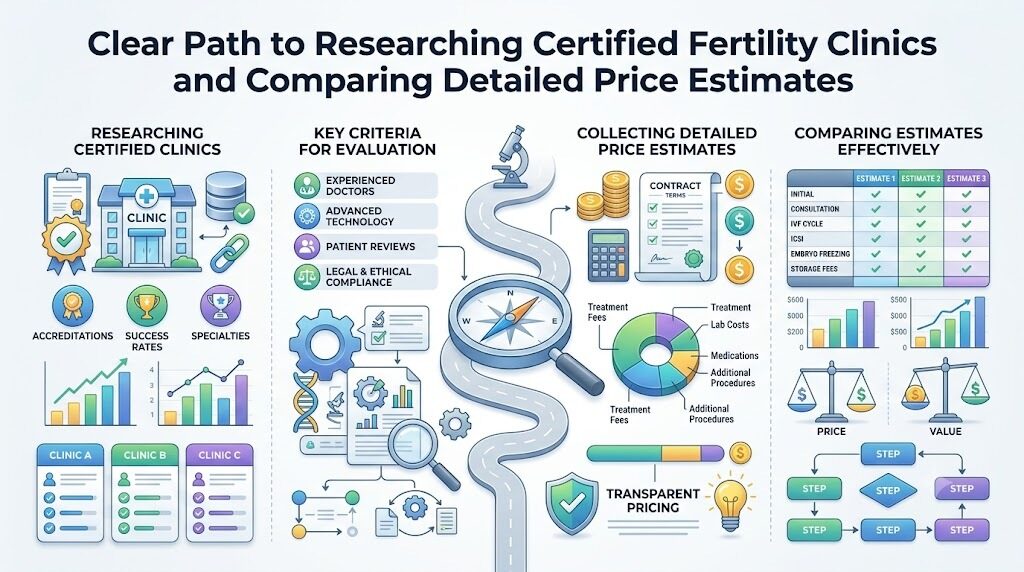
Simple IVF Clinic Comparison Plan
You can find the best fertility clinic by using a clear, calm plan:
Shortlist three to five clinics in your area or travel zone.
Ask the exact same questions to every clinic team on your list.
Compare the medical services and special lab tools each center offers.
Compare full costs, including medicines, tests, and frozen storage fees.
Review their success data for your own age and health history.
Check your daily travel needs and travel costs for all visits.
Ask how the nurses handle your questions after clinic hours.
Discuss all your notes with a trusted medical doctor before paying.
Role of IVFHospitalsNow.com
IVFHospitalsNow.com helps you research fertility topics from home with zero pressure. The platform collects educational facts on treatments, clinics, and common costs across the world. You can read clear guides that explain tests, doctor tools, and legal rules. The site shows you what success numbers mean so you avoid common sales tricks. It does not replace your family doctor or sell any medical care. It simply gives you the knowledge you need to compare options with confidence.
Frequently Asked Questions
1. What is the basic meaning of IVF?
IVF stands for in vitro fertilization. Doctors take eggs from a woman and sperm from a man. Next, they join them inside a warm medical lab dish. The joined cells grow into an embryo over several days. Finally, the doctor places the healthy embryo into the womb. This safe method helps many families who cannot get pregnant through normal ways.
2. How much does an average IVF cycle cost?
A single cycle can cost between five thousand and twenty thousand dollars. The final price depends on your clinic, your city, and your body needs. Medicines often cost extra money on top of basic clinic fees. Tests, lab work, and embryo freezing also raise your bill. Always ask for a written list of every cost before you begin care.
3. What is the main difference in ICSI vs IVF?
In standard IVF, doctors place many sperm cells near an egg in a dish. The strongest sperm cell enters the egg by its own power. In ICSI, a lab worker uses a tiny needle to inject one sperm straight inside. Doctors pick ICSI when sperm counts are low or sperm cannot swim well. Your doctor will tell you which way fits your needs.
4. Are high clinic success rates always real?
High clinic success rates look nice, but you must read them with great care. Some centers only treat easy cases to keep their public scores high. Other centers take hard cases, which can lower their reported numbers. You should always ask about success rates for patients who share your age. Look for live birth rates instead of simple positive pregnancy tests.
5. Why do people travel abroad for fertility care?
Some patients travel to other countries to find cheaper treatment plans. Other people travel because their home country has strict laws on donor cells. Cross-border care can save money, but you must plan for travel and hotel bills. You must also think about follow-up care once you return back home. Good research helps you decide if traveling is truly worth the effort.
6. What extra fees often hide in fertility bills?
Basic clinic ads often skip the cost of daily medicine shots. You may also pay extra for blood tests, scans, and sleep medicines during procedures. If you have extra embryos, labs charge fees to freeze and store them safely. Some clinics also bill extra money for genetic testing on embryos. Ask the clinic finance team for a complete price sheet upfront.
7. How long does one complete IVF cycle take?
One full IVF cycle usually takes between four and six weeks to finish. You start by taking daily medicines to help your eggs grow big. Next, the doctor collects the eggs during a short visit. The lab watches the embryos grow for three to five days. Finally, the doctor places an embryo inside the womb, and you wait two weeks for results.
8. Does insurance cover fertility care costs?
Some insurance plans pay for basic blood testing and doctor visits. But many plans do not pay for IVF lab work or medicine shots. Coverage rules change based on where you live and your specific job benefits. You should call your insurance company and ask them what steps they cover. Getting written answers from your insurer helps you plan your personal savings.
9. What is the best age for egg freezing?
Doctors often say the best time to freeze eggs is in your twenties or early thirties. Younger eggs tend to be healthier, which leads to better results later. However, many women in their mid-thirties also freeze their eggs with good success. A simple blood test can show how many eggs remain in your body. Your fertility doctor will help you decide if freezing makes sense now.
10. What does IUI mean in fertility care?
IUI stands for intrauterine insemination, which is simpler than IVF care. A doctor washes a sperm sample to find the healthiest swimmers. Next, they place this clean sperm directly inside the womb during egg release. This treatment costs much less money and does not require complex lab steps. Many doctors suggest trying IUI before moving forward with full IVF cycles.
11. Can lifestyle habits improve IVF results?
Healthy daily habits can help your body get ready for treatment cycles. Eating fresh foods, sleeping well, and cutting out smoking support good egg and sperm health. Doctors also suggest keeping stress low and doing light exercise like walking. But lifestyle steps cannot fix every medical cause of infertility by themselves. Always follow the medical instructions your care team gives you during treatment.
12. How should I pick my final fertility clinic?
Pick a clinic that communicates clearly and answers your questions with kindness. Make sure their lab meets top standards and their doctors have years of training. Compare total price lists from several clinics so you avoid big money surprises. Also, choose a location that does not cause you extra travel stress. Trust your feelings after you talk with the team during your first visit.
Conclusion
Choosing fertility care takes time, patience, and clear information. You should compare clinics carefully and look at the full cost of every treatment. Check their lab standards, doctor experience, success data, and post-care support before you decide. Helpful resources like IVFHospitalsNow.com offer independent facts to make your clinic search much simpler. Use these educational tools to learn the basics, find providers, and write down good questions. Once you finish your home research, talk about your personal treatment decisions with qualified fertility professionals to start your path safely.