Essential Modern Cloud Skills And Practical Engineering Guidance For Japanese Teams
What DevOps Training Means
DevOps training teaches people to build and run software together smoothly. Developers write the code, and operations teams keep computers running. In the past, these two teams worked in separate rooms. They often blamed each other for errors. Modern training fixes this bad habit. Students learn about automation, which means using computer scripts to do repetitive work. They also learn continuous integration, which means checking code changes automatically. Next, they study automated testing and cloud computers. They set up monitoring tools to watch apps for bugs. But training is not just about tools. It also teaches clear communication and shared goals. Real practice matters most here. Learners type real commands and fix broken systems. Through DevOps 研修, workers gain skills that make daily office tasks much faster.
What is DevOpsSchool.jp
DevOpsSchool.jp is a learning and technology support platform for businesses across Japan. Its main purpose is to help engineering groups upgrade their tech skills. The platform provides live lessons, company classes, and helpful tech advisors. It also connects businesses with skilled freelance engineers for special projects. Teams can ask for direct setup help when building new cloud systems. The platform covers core cloud tools, safe coding, reliability, and machine learning operations. Workers do not just read books there. Instead, they run practical labs and solve real computer problems. Companies use this platform to modernize their daily software delivery. It helps Japanese enterprises stay strong and competitive in a fast digital world.
Why Companies Need DevOps Skills
Doing software tasks by hand creates big problems for businesses. Workers spend hours copying files to servers, so mistakes happen often. Teams find bugs late, which leads to sudden system crashes. Customers get angry when websites go down. Also, slow releases make it hard to launch new features quickly. When computers fail, engineers feel stressed and argue about who caused the fault. DevOps practices fix these painful issues. Smart automation tests every code change in minutes. Computers handle repetitive work, so humans can build creative features. Teams release small updates every week instead of waiting months. Communication improves because everyone shares the same goals. Many Japanese businesses now choose DevOps corporate training Japan to lift their entire engineering department together quickly.
DevOps Training Areas
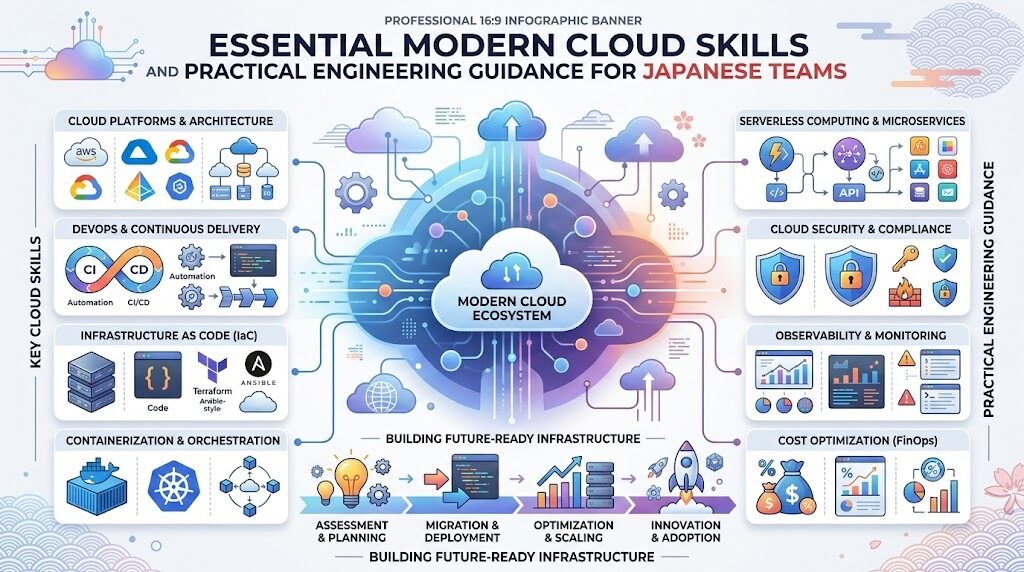
Modern cloud engineering covers many related fields. Teams can pick specific study paths based on their current business goals. Foundational DevOps teaches automated pipelines and teamwork. Next, container classes teach workers how to package apps neatly. Infrastructure classes show teams how to build servers using simple text files. Reliability classes help engineers keep websites running without sudden crashes. Security classes teach developers to catch safety bugs early. Finally, artificial intelligence paths show workers how to deploy smart models safely. Each topic solves a unique workplace challenge.
| Training Area | Simple Meaning | Useful For |
| DevOps 研修 | Teamwork and automated software delivery | Faster and safer app updates |
| Kubernetes 研修 | Managing app containers across many computers | Large scalable web applications |
| Terraform 研修 | Setting up servers with text code | Quick and repeatable cloud setups |
| SRE 研修 | Keeping websites stable and running well | Stopping system crashes and downtime |
| DevSecOps 研修 | Adding security checks inside daily coding | Catching safety bugs before release |
| MLOps 研修 | Running machine learning models in production | Reliable artificial intelligence systems |
Kubernetes Training
Containers are tiny digital boxes that hold an app and all its files. Because of this box, the app runs the same way on any computer. But big companies use thousands of these boxes at once. Managing them by hand is impossible. Kubernetes is a smart tool that manages these boxes automatically. It restarts boxes if they crash. It also adds more boxes when many visitors visit a website. In Kubernetes 研修, learners study how to deploy apps and manage network traffic. They learn how to attach storage drives to keep data safe. They also learn security settings to stop hackers. Hands-on labs are vital because Kubernetes can feel complex at first. Real practice helps engineers run container systems with strong confidence.
Terraform Training
Building cloud servers by clicking buttons on a website takes too much time. People forget steps, and they make silly mistakes. Terraform solves this problem by using Infrastructure as Code. This fancy term means you write text files to describe your servers, networks, and databases. Then, Terraform reads your files and builds everything on the cloud in seconds. In Terraform 研修, students learn to write simple setup files. They learn variables to reuse their code for different projects. They study modules to keep files tidy and clean. Next, they learn about state files, which track every piece of cloud equipment. Most importantly, teams learn safe change management. They can preview server changes before applying them, which prevents costly accidents.
SRE and DevSecOps Training
Site Reliability Engineering, or SRE, teaches engineers to keep websites alive and fast. Reliability simply means your website works whenever a user visits it. In SRE 研修, teams set clear service goals and watch uptime numbers. They set up smart alerts so they notice small errors before customers do. They also create playbooks to fix sudden crashes quickly. DevSecOps brings security into this picture. In the past, security teams tested apps only at the very end. That delayed launches for weeks. With DevSecOps 研修, developers add automated security tests right into their daily work. Every code update gets checked for safety flaws instantly. Security becomes a normal habit for every coder instead of a painful roadblock.
MLOps Training
Machine learning lets computers learn patterns from large piles of data. But running machine learning apps in the real world is tricky. Data changes constantly, and models can become less accurate over time. MLOps solves this big challenge. It connects data science with smart DevOps automation. In MLOps 研修, learners build automated data pipelines. They test their smart algorithms before putting them online. They also build monitors that watch models in real time. If an artificial intelligence model starts making silly guesses, the system alerts the engineers. MLOps ensures that smart tools run smoothly, safely, and cheaply inside modern company systems.
Real-Life Scenarios
An online store suffered slow updates every month because workers copied files to servers manually. After hands-on pipeline training, the team automated their tests. Now, they deploy safe updates three times a day without breaking the checkout cart.
A finance company struggled with sudden website crashes during busy sales hours. The engineers took container lessons and set up automatic scaling. Their cloud servers now expand during traffic spikes and shrink when work slows down.
A health software team worried about data leaks and safety rules. They added automated security scanners to their code repository. The system now stops weak code before it reaches production servers.
A startup wasted days building test servers by clicking cloud console menus. They wrote clean text scripts to define their infrastructure. Now, they launch identical test environments in five minutes with one simple command.
DevOps Consulting and Support in Japan
Training teaches your staff new skills, but consulting helps you solve immediate hard problems. Sometimes a team lacks the time to build new pipelines alone. That is when DevOps コンサルティング becomes very helpful. An expert advisor studies your current workflow and spots hidden bottlenecks. A DevOps consultant Japan works directly with your managers and engineers. They help design clean architectures and pick the right tools. After setting up the system, companies often need ongoing help. Reliable DevOps support Japan ensures that experts are ready when unexpected server errors happen. A platform like DevOpsSchool.jp provides this steady guidance alongside its regular lessons.
Common Mistakes When Adopting Modern Tech Skills
Choosing training that only offers video lectures without live hands-on practice. Solution: Pick classes with interactive labs where students type real commands.
Trying to learn ten complex tools at the same time. Solution: Master one foundational tool like Git or Linux before adding hard tools.
Ignoring company culture and keeping developers separated from server operators. Solution: Host joint training sessions so both teams solve problems together.
Forgetting to teach basic security rules during initial coding lessons. Solution: Add simple security scans to early practice projects.
Skipping server monitoring because the test app seems to work fine. Solution: Set up basic alerts and dashboards right from the start.
Copying complex setups from internet blogs without understanding the basic concepts. Solution: Study the core ideas behind containers and networks first.
Training only one senior engineer while leaving the rest of the team behind. Solution: Train whole groups together so everyone speaks the same technical language.
Stopping all practice once the formal classroom lessons end. Solution: Give workers small internal projects to apply their fresh skills right away.
Choosing The Right Tech Course
Before spending money on classes, managers must check course details carefully. A good syllabus matches your real office goals. Check if the course includes real browser labs or local virtual machines. Practical labs help students remember hard ideas much better than slides. Also, ensure the teacher covers safety checks and system stability. Team training works best because whole groups learn together. Finally, check if the provider offers post-training help for tricky office questions.
| Check Before Training | Why It Matters |
| Hands-on labs | Typing commands helps students remember practical steps |
| Real tool coverage | Ensures staff learns tools your company actually uses |
| Clear security basics | Protects your business from dangerous data leaks |
| Team training options | Helps developers and operators build shared daily habits |
| Follow-up help | Gives engineers answers when applying lessons to real projects |
| Local market focus | Ensures lessons fit Japanese enterprise workflows and schedules |
Learning Paths With Modern Platforms
Finding good educational material in Japan can feel tough for busy engineering teams. DevOpsSchool.jp offers a clear path forward for both beginners and experienced coders. The platform focuses on practical training, expert consulting, direct setup help, freelance talent, and ongoing support. Learners can start with basic DevOps ideas and grow into advanced subjects. They can study Kubernetes, Terraform, SRE, and DevSecOps step by step. They can also explore modern MLOps methods to support artificial intelligence projects. Because the platform balances lessons with hands-on consulting, companies get practical help that directly improves their daily software delivery.
Frequently Asked Questions
1. What is covered during DevOps 研修?
DevOps 研修 teaches engineers how to automate software delivery and improve team communication. Students study version control, automated testing, continuous integration, and server monitoring. They also practice running applications on cloud platforms. The lessons focus on real commands, so workers can eliminate slow manual work in their daily office tasks.
2. Why do companies choose DevOps corporate training Japan?
Companies choose DevOps corporate training Japan to upgrade their entire tech staff at the same time. Group classes help developers and server managers build common goals. Teams learn to release software faster with fewer errors. Upskilling existing staff also saves money compared to hiring new workers from outside.
3. What do students learn in Kubernetes 研修?
In Kubernetes 研修, students learn to run app containers across groups of servers. They practice deploying web apps, scaling traffic, and attaching storage drives. They also study networking rules and basic security controls. These hands-on labs teach engineers how to keep big websites running without unexpected crashes.
4. How does Terraform 研修 help IT teams?
Terraform 研修 shows teams how to set up servers using simple code files. Learners study how to write clean configuration scripts, manage variables, and use modular templates. They also learn to preview cloud changes safely. This training stops human errors caused by clicking cloud menus manually.
5. Who should enroll in SRE 研修?
System administrators, platform engineers, and developers who manage live systems should take SRE 研修. The course covers uptime monitoring, alert setups, and incident response. Learners discover how to track service levels and write recovery playbooks. It helps teams stop system outages before customers notice any problems.
6. Why is DevSecOps 研修 important for coders?
DevSecOps 研修 teaches developers to add automated security checks directly into their daily pipelines. Students learn to scan code for weak spots, test open-source packages, and check server configurations. Finding bugs early saves weeks of rework and protects company data from dangerous web attacks.
7. What makes MLOps 研修 unique?
MLOps 研修 connects data science with automated software pipelines. Learners discover how to package machine learning models, test data inputs, and monitor live predictions. The training helps artificial intelligence teams release smart updates quickly and keep their models accurate over long periods of time.
8. What happens during DevOps コンサルティング?
During DevOps コンサルティング, an experienced advisor examines your current software workflow. The expert spots slow manual steps and suggests better cloud tools. They help your staff build automated pipelines and safe cloud architectures. This direct guidance helps companies modernize without wasting valuable engineering time.
9. When should a business hire a DevOps consultant Japan?
A business should hire a DevOps consultant Japan when its internal team feels stuck or lacks cloud experience. Consultants help design complex systems, fix failing pipelines, and set up modern tools. They guide your staff through tricky migrations so your business avoids costly technical mistakes.
10. What is included in ongoing DevOps support Japan?
DevOps support Japan provides continuous technical help for live cloud systems and automated pipelines. Support engineers answer tricky questions, troubleshoot sudden server errors, and review system updates. This steady assistance gives companies peace of mind while they run mission-critical apps in production.
11. How should a manager choose a DevOps training course?
A manager should choose a course that features hands-on labs and real tools. Check whether the syllabus covers daily teamwork, basic security, and system reliability. Also, make sure the lessons fit your team's current skill level and offer post-class guidance for real office work.
12. How can an engineering team start DevOps training in Japan?
An engineering team can start by finding their biggest daily bottleneck, such as slow manual deployments. Next, pick a focused course that solves that exact issue. Platforms like DevOpsSchool.jp offer structured roadmaps, live instructors, and practical exercises to help Japanese teams begin their learning journey smoothly.
Conclusion
Modern software delivery demands speed, stability, and great teamwork across all technical departments. Learning practical DevOps methods helps businesses eliminate manual mistakes and release better applications every day. Related skills like Kubernetes, Terraform, SRE, DevSecOps, and MLOps build on this strong foundation to create resilient, secure cloud systems. Educational platforms such as DevOpsSchool.jp offer helpful training, advisory consulting, project implementation, and technical support for teams across Japan. Companies do not need to fix every computer problem overnight. Instead, pick one painful daily bottleneck, start with focused training, and build better engineering habits step by step.