Crucial Factors to Review When Choosing Specialized Reproductive Healthcare Centers Worldwide
What Is IVF Treatment?
IVF stands for in vitro fertilization. This medical term simply means joining an egg and sperm outside the body. First, doctors give a woman medicine to help her grow healthy eggs. Next, the doctor collects these mature eggs during a short, gentle visit. Lab scientists then place the eggs and sperm together in a small dish. Soon, fertilized eggs grow into tiny groups of cells called embryos. A doctor carefully places a healthy embryo into the woman's womb. If the embryo sticks to the womb wall, pregnancy begins. But IVF may not work for every single person or couple. You should always speak with a certified fertility doctor about your body.
Understanding IVF Treatment Cost
Treatment prices often vary widely between different clinics and cities. A single base price quote rarely covers the whole medical process. First, patients pay for doctor visits, blood tests, and ultrasound scans. Next, daily hormone medicines can add significant costs to the total bill. Clinics also charge for the egg pickup and the lab work. In addition, freezing extra embryos for later requires yearly storage fees. Some patients also choose special lab add-ons or genetic cell tests. Therefore, you must always ask clinics for a complete price list.
Cost Breakdown for Common Care Items
| Care Item | What It Covers | Important Fact to Check |
| Initial Tests | Blood work and scans | Check if your visit includes tests. |
| Daily Medicines | Shots that help eggs grow | Drug costs change based on your body. |
| Egg Pickup | Doctor fee and light sleep medicine | Ask if hospital fees are included. |
| Lab Work | Joining the egg and sperm | Check if basic embryo growth is included. |
| Embryo Transfer | Placing an embryo into the womb | Find out the cost for extra tries. |
| Cold Storage | Freezing extra healthy embryos | Ask about yearly freezer storage fees. |
Why IVF Success Rates Need Care
Clinic success numbers can look very exciting at first glance. However, one single percentage number never tells the full personal story. A person's age strongly affects egg health and overall outcomes. Specific health conditions and sperm quality also shape every cycle result. Furthermore, some clinics only treat patients who have very easy cases. Other clinics welcome tough cases and naturally report lower overall numbers. Because of this, you should never pick a clinic from one number. Always ask doctors about real outcomes for people of your exact age.
Helpful Questions to Ask About Clinic Data
| Topic to Check | Key Question to Ask | Why This Question Matters |
| Patient Age | What is the birth rate for my age? | Age changes egg health and cycle results. |
| Type of Transfer | Does this number show fresh or frozen tries? | Frozen transfers often have different rates. |
| Clinic Rules | Do you turn away hard medical cases? | Some clinics only treat easy cases to boost stats. |
| Live Births | Does this number count positive tests or babies? | A baby going home matters most to families. |
| Single Embryos | Do you place one or two embryos? | Placing one embryo is safer for mom and baby. |
How to Compare Fertility Clinics
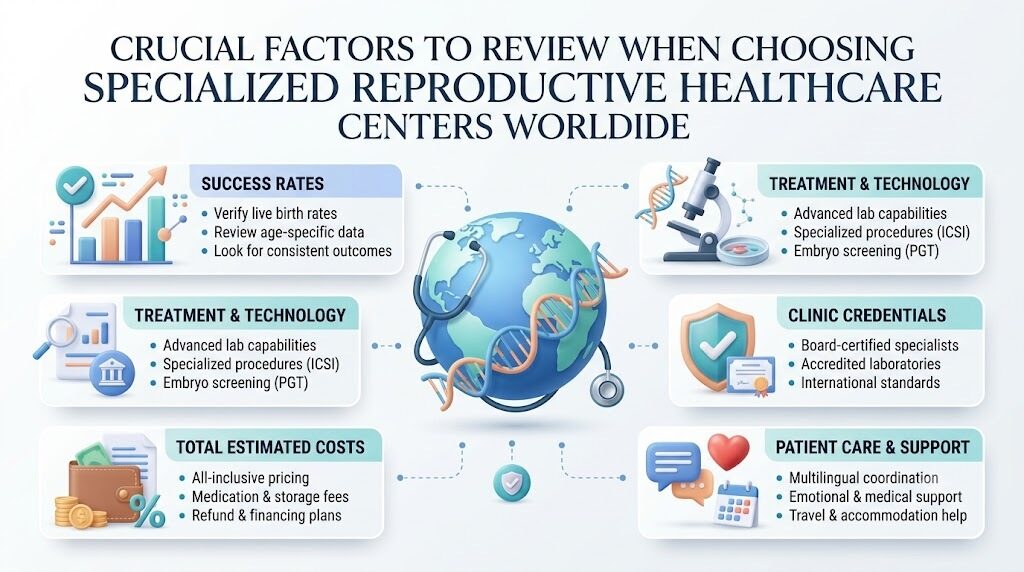
Patients can compare clinics smartly by checking simple, proven facts. First, look at doctor qualifications and their years of real experience. Next, check if the clinic runs an advanced, modern clean lab. High-quality labs protect tiny embryos and help them grow well. Also, ask about clear price sheets with zero hidden extra fees. Look for clinics that offer kind follow-up calls and counseling support. You can use our research platform to review verified clinic facts. We help you explore options without biased rankings or pushy sales talk.
IVF Abroad and IVF Cost by Country
Many people travel to other countries for their fertility care today. Some nations offer lower medical fees for standard clinic visits. Other countries have helpful laws that fit different family needs better. However, you must also plan for plane tickets and hotel rooms. Long travel days can also cause physical tiredness and extra stress. In addition, you may need extra visits if plans change unexpectedly. Make sure foreign clinics follow strict safety rules and lab standards. Cheap prices alone should never guide your final healthcare decision.
Egg Freezing and Future Family Plans
Egg freezing helps women save healthy eggs for their future family. First, a woman takes gentle hormone medicines for about ten days. These safe shots help her body grow several eggs at once. Next, a doctor collects the mature eggs during a short visit. The lab freezes the healthy eggs quickly at very cold temperatures. These frozen eggs can wait safely in storage for many years. When ready, scientists thaw the eggs and mix them with sperm. However, freezing eggs never guarantees a future baby for sure.
What Is ICSI Treatment?
ICSI is a special lab technique used during an IVF cycle. The full name is intracytoplasmic sperm injection. A lab scientist selects one strong, healthy sperm under a microscope. Next, the specialist injects that single sperm straight into an egg. Doctors often suggest ICSI when sperm counts or shapes are low. It also helps when sperm have trouble swimming into the egg alone. But ICSI does not promise that an embryo will grow. Your fertility doctor can tell you if your family needs ICSI.
Real-Life Scenarios / Experiences
A young couple checking full clinic costs: Anna and Mark received a low basic price quote from a local clinic. But they asked for a full list of medicine and storage fees. They found the real total was much higher than the advertisement. This careful check helped them budget their money without any surprise bills.
A patient looking past headline numbers: David and Priya visited a clinic with very high reported success rates. They asked if those numbers applied to women over age thirty-eight. The doctor explained that those rates only applied to much younger patients. So, they chose a clinic that gave honest, age-matched medical data.
A solo professional planning for the future: Elena decided to freeze her eggs while focusing on her busy job. She spoke with two different clinics about storage security and thaw rates. She learned that frozen eggs offer a helpful option but not a guarantee. This honest talk helped her set realistic plans for her future family.
Common Mistakes to Avoid When Choosing Care
Trusting a cheap advertised base price: Many low quotes leave out medicines, lab steps, and vital scans. Always ask for an itemized price sheet before you start care.
Believing one giant success number: High clinic percentages often hide tiny patient groups or easy medical cases. Ask for specific live-birth rates that match your exact age.
Skipping questions about the lab: Embryos need clean air and steady warmth to survive and grow. Check if the clinic uses modern lab equipment and certified scientists.
Forgetting travel and hotel costs: Traveling abroad can look cheap until you add hotels, meals, and flights. Calculate your full travel budget before booking any trips far away.
Ignoring emotional counseling and support: Fertility care can bring stress, worry, and big emotional ups and downs. Choose clinics that provide caring nurse teams and helpful mental counseling.
Assuming egg freezing guarantees a baby: Freezing eggs preserves your cells, but some may not survive thawing. View frozen eggs as a helpful backup plan, not a total guarantee.
Rushing into unproven lab add-ons: Some clinics sell expensive extra tests without solid medical proof behind them. Ask your doctor if research shows that the extra test really helps.
Choosing a clinic without verifying staff: Some centers hire visiting doctors who are not there every single day. Make sure your clinic has permanent, fully licensed fertility experts on site.
How IVFHospitalsNow.com Can Help With Research
IVFHospitalsNow.com is an independent fertility-care education and research platform. It helps people discover verified providers and learn about assisted family care. You can research treatments, common fertility conditions, and essential health tests easily. The platform also explains medicines, typical costs, and important doctor backgrounds. Furthermore, you can review location details, foreign country rules, and comparison factors. We do not rank clinics or make unsupported medical claims at all. Instead, we give you clear facts so you can choose wisely.
A Simple Way to Plan Your Research
Write down your basic health history: Note your age, previous medical tests, and any past treatment attempts clearly.
Review your full family budget: Determine how much money you can spend on care, medicines, and storage.
Search for verified fertility centers: Use independent research sites to find certified clinics and experienced doctors near you.
Ask detailed questions about procedures: Ask about ICSI, freezing rules, and how they handle delicate embryo growth.
Request a complete written price sheet: Make sure the quote includes doctor fees, medicines, lab tools, and scans.
Schedule an honest doctor talk: Discuss your test results openly with a qualified physician before making final decisions.
Frequently Asked Questions
1. What happens during an IVF cycle?
First, you take medicines to grow multiple healthy eggs. Next, the doctor collects the eggs during a short visit. Scientists combine the eggs and sperm inside the laboratory dish. The fertilized eggs grow into embryos over several days. Finally, the doctor places one embryo into the womb. You take a pregnancy test about two weeks later.
2. How much does IVF treatment cost?
IVF costs vary across different clinics, states, and nations. A single cycle often costs several thousand dollars in total. The final price includes doctor visits, scans, and daily medicines. Lab services and embryo storage also add to the final bill. You should always ask your clinic for a full written price sheet.
3. Are high success rates always reliable?
High success rates do not always mean a clinic is superior. Some clinics achieve high numbers by treating only easy patient cases. Other centers treat complex health conditions, which lowers their overall numbers. Always ask for live-birth rates for patients in your specific age group. That gives you a much clearer picture of your own chances.
4. What is the difference between IVF and ICSI?
Standard IVF places many sperm next to an egg in dishes. The sperm must swim into the egg on its own. With ICSI, a scientist injects one sperm directly into the egg. Doctors use ICSI when sperm counts or movement are quite low. Both procedures help create embryos for transfer into the womb.
5. Does egg freezing guarantee a baby?
Egg freezing does not guarantee a future baby for anyone. It simply preserves your eggs at their current biological age. Some eggs may not survive the delicate thawing process later on. Others may not fertilize or grow into healthy embryos. However, it remains a helpful option for planning your future family.
6. Why do patients travel abroad for care?
Many patients travel abroad to find more affordable medical care. Other people travel because foreign laws permit specific family building options. However, you must factor in flight tickets, hotel rooms, and meals. Long trips can also cause physical fatigue and unexpected personal stress. Always verify the safety standards of any foreign clinic first.
7. Does an embryo transfer cause pain?
An embryo transfer is usually a quick and gentle procedure. Most women feel very little discomfort during the short office visit. The doctor passes a thin, soft tube through the cervix. Then, the doctor places the embryo gently inside the uterus. The visit feels very similar to a routine cervical smear test.
8. How long does an IVF cycle take?
A single IVF cycle usually takes about two to three weeks. First, you take hormone shots for about ten to twelve days. Next, the doctor collects your eggs during a brief morning visit. Embryos grow in the lab for three to five days. Finally, the doctor completes the embryo transfer in a few minutes.
9. What are common fertility treatment options?
Doctors offer many different paths depending on your specific health. Some couples start with simple lifestyle changes or basic fertility pills. Others try intrauterine insemination, which places sperm inside the womb. If those steps fail, patients often move forward with IVF or ICSI. A specialist will help you choose the best treatment path.
10. Can I pick the gender of my baby?
Gender selection rules depend on the laws of each country. Some nations allow genetic testing of embryos to check for disease. In those regions, doctors can also identify the baby's sex. However, many countries ban gender selection unless severe genetic disorders exist. You must check the legal rules in your own care region.
11. What questions should I ask a new clinic?
Ask the clinic about their live-birth rates for your age. Inquire about the total cost, including medicines and storage fees. Ask if they perform ICSI and how they monitor embryo growth. Find out who answers your calls during weekends and unexpected emergencies. Clear communication from your clinic is essential for stress-free care.
12. How does IVFHospitalsNow.com help patients?
Our platform provides independent, medically reviewed guides about fertility treatments and costs. You can explore verified clinic profiles and compare vital provider details easily. We do not rank clinics or make biased medical promises at all. Instead, we give you transparent facts so you can make informed choices. Our tools help you prepare smart questions for your doctor.
Conclusion
Choosing fertility care is an important journey that requires time and patience. Never base your clinic choice on a cheap advertised price alone. High success percentages can also mislead you if you skip the fine print. Instead, compare verified facts, doctor skills, lab quality, and honest costs. Take advantage of independent educational tools to study your options at home. Most importantly, always discuss your personal health needs with a qualified medical specialist. Reliable facts will give you confidence as you take each new step.