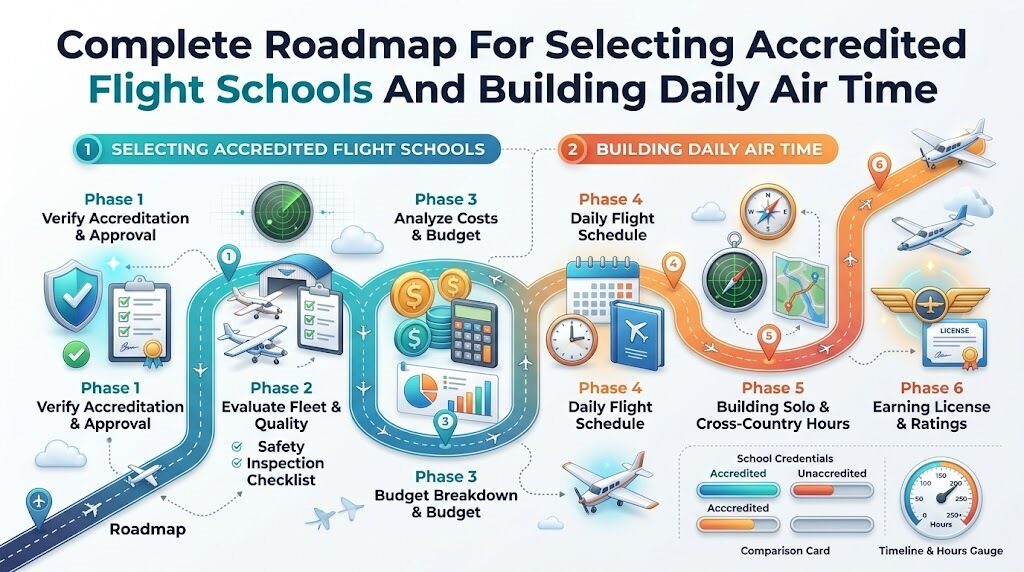
Complete Roadmap For Selecting Accredited Flight Schools And Building Daily Air Time
What Does a Pilot Do?
A pilot flies airplanes or helicopters safely through the sky. Pilots carry vacation travelers, business guests, or heavy cargo across the world. Some pilots drop water on forest fires or rescue sick people. Others teach new students how to take off and land.
Every flight requires careful teamwork between two pilots in the cockpit. The cockpit is the front room of the plane with all the controls. Pilots inspect the wings and fuel tanks before every flight. Next, they review weather maps and talk with air traffic controllers. Controllers are ground workers who tell planes when to move. Pilots make calm choices if storm clouds appear or systems fail. The job demands total focus, good rest, and steady habits.
How to Become a Pilot
You start by meeting basic age and health standards. Next, you must pass a medical check from an approved aviation doctor. After that, you begin ground school.
[Medical Exam] ---> [Ground School] ---> [Flight Practice] ---> [Exams & License]
You must pass written tests and a flight test called a checkride. A checkride is an in-flight test with an official examiner. Your license unlocks after you log enough flying hours. Aviation rules differ in every country, so always check your local civil aviation authority. To research early flight steps, visit bestpilotsnow.com.
How to Choose the Best Flight Schools
You should always verify that a school holds full approval from your national aviation authority.
Talk with current flight students to hear honest feedback. You can use Best Pilots Now to explore flight school details and questions before your visits.
Types of Pilot Training Courses
Flight paths depend on your personal goals and your budget. The first step for beginners is private pilot license training. This course lets you fly friends and family for fun. But you cannot fly for money with a private license.
Next comes commercial pilot training.
After that, students can take airline pilot training or join airline cadet programs. Cadet programs are structured school pipelines partnered directly with airline companies. Later, pilots complete type rating courses.
Understanding Pilot Training Cost
Pilot training costs vary widely because every student learns at a different speed. Total fees include airplane rental hours, fuel, and teacher fees. You must also pay for ground lessons, books, headsets, and flight maps.
[Plane Rental + Fuel] + [Instructor Pay] + [Exams & Gear] = Total Training Cost
Testing fees, doctor exams, and travel living expenses add to the total bill. If you fail a practice maneuver, you must buy extra flight hours. Always compare school fee sheets line by line. The table below shows typical pilot training expenses:
Websites like Best Pilots Now offer helpful starting points to plan your education budget.
Medical Checks and Flight Safety
A pilot must stay healthy to keep passengers safe in the sky. Aviation doctors check your heart, blood pressure, lungs, and balance. They also test your vision and color vision. You can often wear glasses or contact lenses to meet the eyesight rules.
Hearing tests make sure you can understand radio messages over cockpit noise. Always check your country's medical rules before you spend any money on flying lessons. Safe flying also means using checklists before every takeoff. Pilots never rush, and they never fly when sick or tired.
Real-Life Scenarios / Experiences
Cross-Country Navigation: A student flies 150 miles to another airport using radio navigation tools. Sudden low clouds appear, so the student diverts to an alternate runway safely.
Bad Weather Decision: A flight student arrives at the hangar on a windy morning. The wind blows too hard across the runway, so the student cancels the flight to remain safe.
Pre-Flight Inspection Check: While checking the airplane wings, a student spots a loose screw on the fuel flap. The student reports it to a mechanic immediately and avoids an in-flight emergency.
Pilot Jobs and How to Hire a Pilot
Aviation offers many exciting jobs for skilled pilots. New commercial pilots often work as flight instructors to build flight time. Other pilots fly cargo packages at night or spray farm fields. Corporate pilots fly business leaders in private jets. Airline pilots carry passengers across international routes.
Pilots get ready for jobs by keeping clean logbooks and neat resumes. Aviation employers check licenses, flight hours, and safety records before hiring.
Common Mistakes to Avoid
Skipping the Medical Check Early: Some students pay for lessons before seeing an aviation doctor. Always get your medical clearance first so you know you qualify.
Paying All Tuition Upfront: Some students give all their savings to a flight school on day one. Pay in smaller blocks so your funds stay safe if the school shuts down.
Training Irregularly: Flying once every two weeks slows your memory. Schedule two or three lessons every week to finish faster and spend less.
Ignoring Ground School Study: Weak textbook knowledge leads to failed checkrides. Study flight theory books every night to ace your written exams.
Selecting the Wrong Airplane Fleet: Training on rare planes can cause parts delays. Choose common training airplanes like the Cessna 172 or Piper Archer.
Failing to Budget for Extra Hours: Most students need more than the minimum flight hours. Add a 20 percent buffer to your budget for extra practice.
Skipping Pre-Flight Checklists: Rushing past safety steps invites danger. Use your printed checklists on every single flight without shortcuts.
Not Researching Local Flight Rules: Flying rules differ across borders.
Always read your local aviation authority manuals before choosing a training track.
How Best Pilots Now Can Help You Start
Starting your aviation journey can feel overwhelming at first. Best Pilots Now operates as an aviation discovery platform for students and flight fans.
Best Pilots Now is also building a directory to highlight flight specializations.
Frequently Asked Questions
1. Can I learn to fly if I wear glasses?
Yes, you can become a pilot if you wear glasses or contacts. The aviation doctor checks if your glasses correct your vision to standard safety levels. Many commercial airline pilots wear corrective lenses every single day on duty. Always check your local civil aviation authority medical rules before starting lessons.
2. How old do I need to be to fly?
In most countries, you can begin flight lessons at age 14 or 15. You can fly solo on your 16th birthday if your teacher approves. You must be 17 years old to hold a private pilot license. Commercial licenses require you to reach 18 years of age.
3. What is the difference between private and commercial pilot licenses?
A private pilot license allows you to fly for sport, fun, and personal transport.
4. How long does it take to earn a pilot license?
Training time depends entirely on your personal schedule, budget, and local weather. Full-time students often finish a private license within three to six months. Part-time students who train on weekends may take one year or longer. Flying several times each week helps you finish much faster.
5. What happens during a checkride exam?
A checkride is your official practical test with a government examiner. First, the examiner asks oral questions on rules, weather, and plane systems on the ground. Next, you fly together to test takeoffs, steep turns, emergency drills, and smooth landings. When you pass both parts, you earn your license.
6. Why are flight training costs so high?
Airplanes burn expensive high-grade aviation fuel during every practice hour. Schools also spend huge sums on engine maintenance, hangars, insurance, and certified flight instructors. Every flight hour covers aircraft wear, airport fees, and individual instruction. Planning your lessons carefully helps prevent waste and controls overall costs.
7. Do I need a college degree to fly for airlines?
Most major airlines do not require a four-year college degree today. They focus instead on your flying hours, safety history, and teamwork skills. However, having a college degree can still help your resume stand out in competitive job markets. Some regional airlines hire pilots straight out of flight academies.
8. What is a type rating course?
A type rating is a special course for one specific large airplane model.
9. Can bad weather stop my flight lessons?
Yes, bad weather frequently cancels training flights for student pilots. Beginners can only fly when clouds stay high and winds remain gentle. If rain, low fog, or thunderstorms appear, flight schools cancel lessons for safety. When bad weather hits, smart students use that time for ground school study.
10. What is an instrument rating?
An instrument rating trains you to fly using only cockpit dials and screens.
11. How do new pilots build flight hours for airline jobs?
Airlines require hundreds or thousands of flight hours before hiring first officers. New commercial pilots often work as certified flight instructors to gain those hours. Others fly cargo runs, banner towing planes, or sightseeing tours for tourists. These jobs pay pilots while helping them build necessary flight experience.
12. Is Best Pilots Now an accredited flight school?
No, Best Pilots Now is not a flight school and does not provide flying lessons.
CONCLUSION
Becoming a pilot takes patience, study, and hard work, but the journey brings big rewards. You must pick an approved flight school, pass medical checks, and log practice hours with an instructor. Always compare school fees and aircraft fleets carefully before you sign any training contracts.